
Our Beef:
Genetics & Finishing
At Rancho Molina, we don't believe in "generic" beef. The quality of our product is the result of a deliberate genetic strategy and an evolving approach to finishing that prioritizes both the animal and the end product.

Our Genetic Foundation
We select our cattle based on two distinct, complementary genetic goals:
The Stabilizer Advantage (Operational Efficiency)
We utilize Stabilizer genetics to build a herd that is environmentally adapted, fertile, and structurally sound. These cattle are bred for high-efficiency, allowing them to thrive on the terrain and forage provided by our pastures throughout the Plateau Valley. By selecting for these traits, we ensure our herd remains resilient and capable of producing consistent quality, while securing the future health and performance of our herd for years to come.
The Akaushi Impact (Quality & Health)
We incorporate Akaushi (Red Wagyu) genetics to elevate the end product. Akaushi are world-renowned for their fine, intramuscular marbling and a unique fatty acid profile. This provides a rich eating experience and a nutrient-dense fat profile that is high in monounsaturated fatty acids. Beyond culinary quality, the breed brings practical operational advantages, including excellent maternal instincts and the structural integrity needed for them to thrive in our rugged terrain.
Our Finishing Philosophy
We are often asked why we finish our cattle with grain rather than exclusively on grass. For us, it is a choice made to achieve a higher standard of culinary performance. Our cattle are raised with access to pasture for the duration of their lives. In the final stage, we provide a supplemental grain ration. We are continually refining this finishing process, experimenting with the duration and density of grain-on-grass feeding to bring out the best in our Akaushi genetics.
The Benefits of our Approach
Marbling Potential: Providing supplemental grain allows us to tap into the Akaushi breed's natural ability to marble. It creates a richer, more consistent eating experience than a strictly grass-fed approach.
Flavor Depth
The combination of natural forage and grain develops a complex, savory flavor profile that avoids the potential "gamey" or lean finish sometimes found in purely grass-finished animals.
Human Health
We believe that the health benefits of beef are best realized through a diet that allows for healthy muscle growth of the animal. The grain-on-grass approach produces a high-quality fat profile that retains the nutrients of pasture-raised beef while maximizing the tenderness and palatability our customers value.
Our Commitment to Quality
By pairing adaptable genetics with a deliberate, thoughtful finishing philosophy, we ensure that every cut of Rancho Molina beef delivers the consistency, richness, and exceptional flavor your table deserves.




Our Pork:
Heritage Quality & Practical Efficiency
At Rancho Molina, we apply the same intentional mindset to our pork that we do to our beef. Great pork doesn't happen by accident—it is the result of hard-earned experience, refining our process over the years, and focusing on a clean, consistent finish.
Our Approach
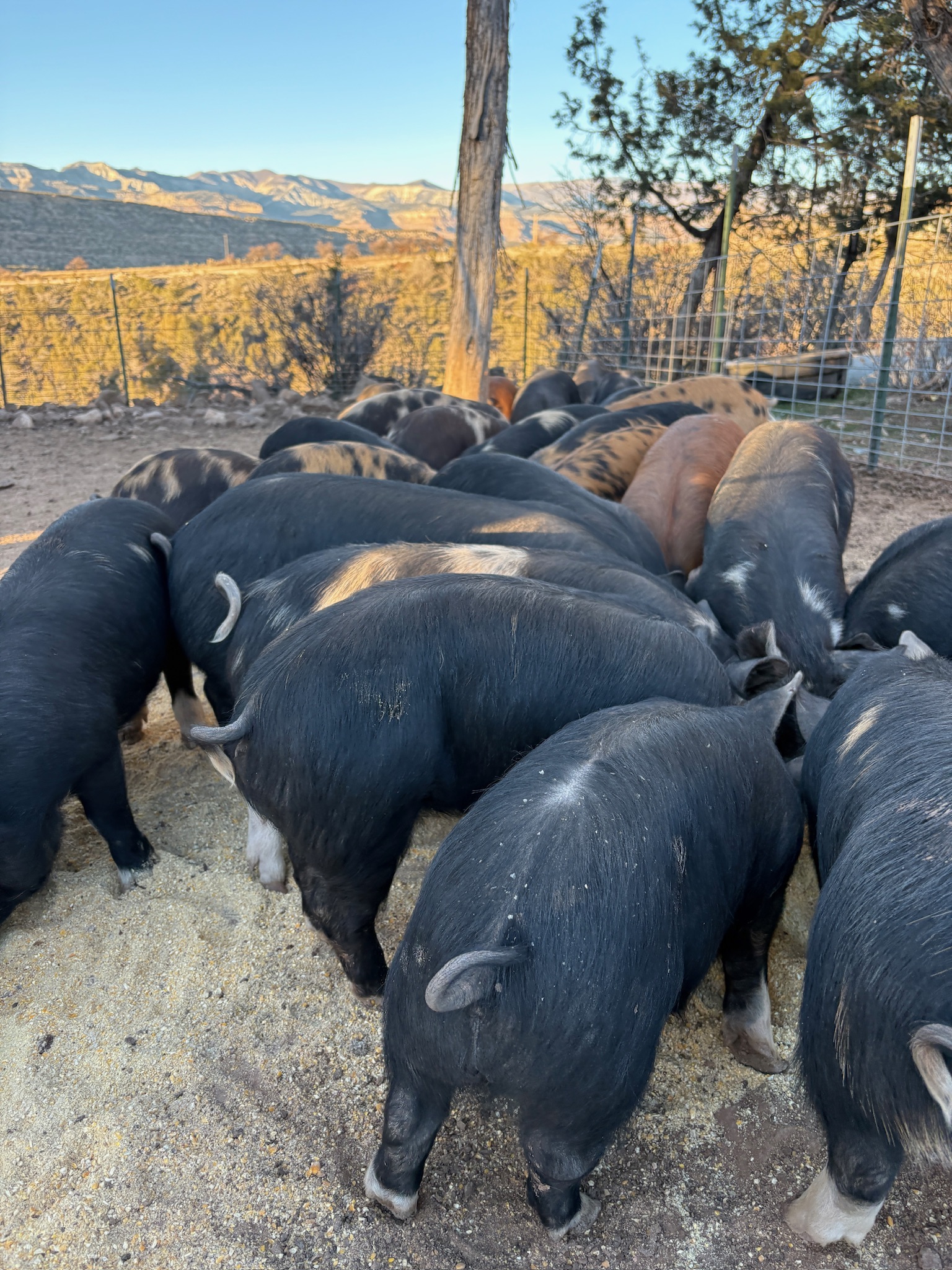
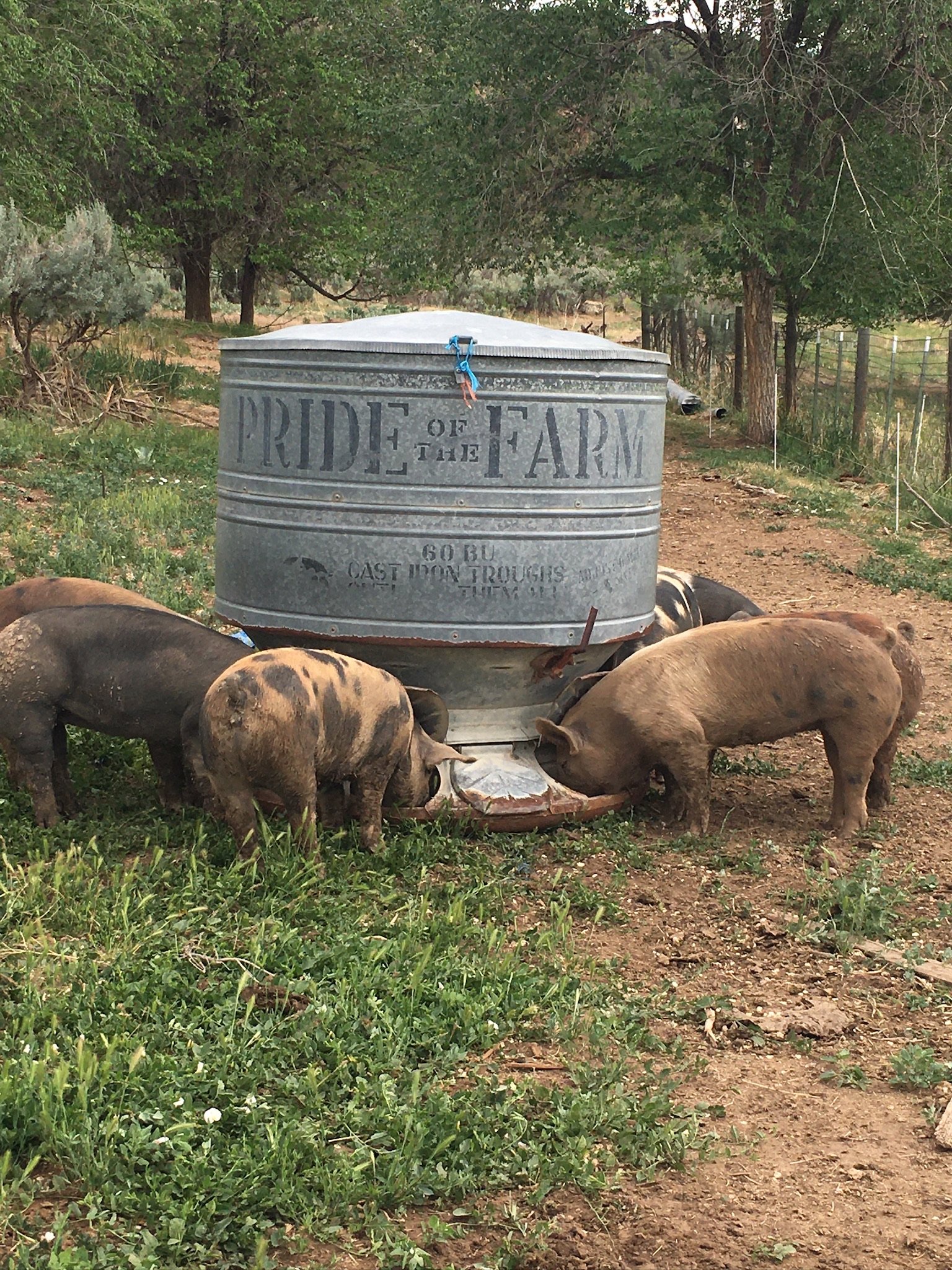
When it comes to raising pigs, our production style has always centered on giving them room to move. Whether they are out utilizing rotational hot-fence pastures or working through large exercise pens, our goal has always been to raise active, healthy animals.
Our sourcing and breed choices, however, have evolved through years of firsthand experience.
Where We Started
Every operation has to start somewhere, and ours began with hands-on basics: purchasing local, Colorado-born weaner pigs from various producers and finishing them out on our pastures. This foundational phase gave us our initial experience managing pastured pork through our weather cycles, teaching us how different animals perform on our terrain, and setting the baseline for everything that followed.
The IPP Chapter
Seeking an animal that was especially gentle on fences and turf, we shifted to raising Idaho Pasture Pigs (IPPs) for the last 4 to 5 years. While we appreciate their docile temperament and the genuinely excellent flavor they produce, the reality on the ground has shown us the breed's limitations: unpredictable fertility, smaller litter sizes, slow growth rates, and a hard time reaching a reasonable hanging weight efficiently.
The Shift Back to Proven Heritage Lines
We are currently finishing out our final batches of IPPs, with last harvest dates occurring in the spring of 2027. Moving forward, our strategy is returning to a more streamlined model: buying weaner pigs from trusted local producers rather than managing a breeding herd ourselves. Our first heritage-cross pork is expected to hit the lineup by the summer of 2027.
We focus on established regional breeders who work with premier heritage lines—relying on proven breed crosses including Duroc, Berkshire, Hampshire, Hereford, and Old Spot. These traditional breeds bring the ideal combination of hardiness, strong structure, rich marbling, and depth of flavor that industrial commodity pork simply cannot touch.
By partnering with local breeders for our weaner pigs, we gain distinct operational advantages:
Predictable Harvest Schedules
A tighter finishing window means reliable harvest dates batch after batch, taking the guesswork out of our inventory planning.
Streamlined Ranch Labor
By leaving farrowing and sow management to dedicated breeders, we focus 100% of our energy and facilities on the grow-out phase.
Built-In Flexibility
It gives us the ability to go without pigs at certain times of the year, giving both our pens and ourselves a much-needed break.
Our Finishing Philosophy
Our goal with pork is simple: reliable quality, excellent flavor, and consistent performance every single time it hits the pan. By focusing on proven heritage crosses fed a clean, carefully managed ration, we ensure that every cut delivers on taste and value without the guesswork.